
American Ethnogensis
The History and the Culture of the American Founding Stock

America is not a "melting pot".
Americans are a distinct, ethnic people who evolved "beyond" Europeans, through generations of frontier conquest.
Here's how we Americans became a unique ethnic people:
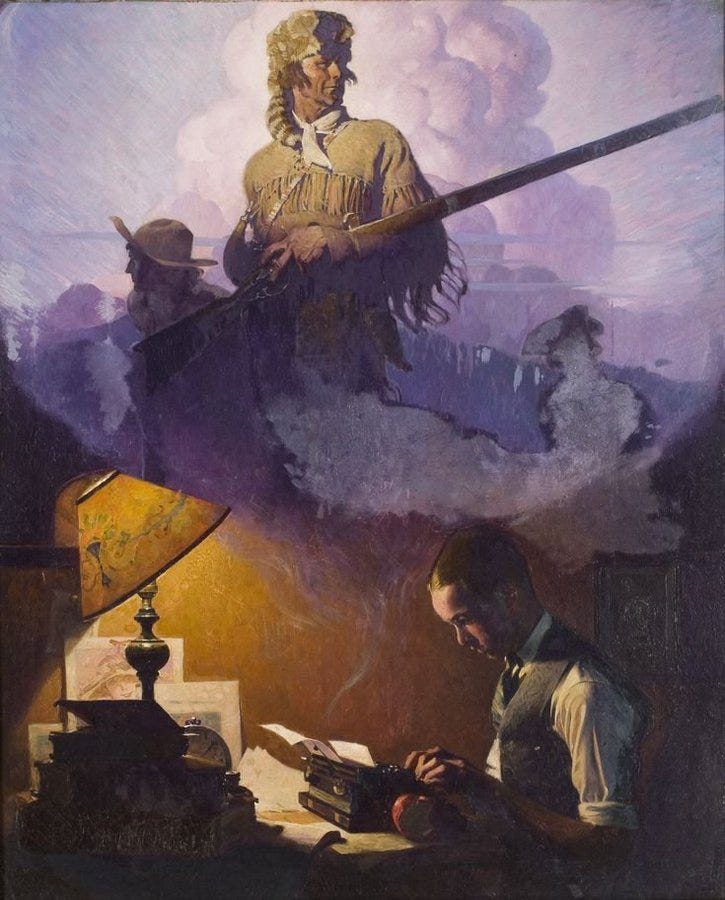
In 1893, historian Frederick Jackson Turner developed the "frontier thesis".
He asserts that our founding, European families ethnogenesized into a unique people (Americans) as a result of our integration with and conquest of nature.
He writes, "American development has exhibited not merely advance along a single line, but a return to primitive conditions on a continually advancing frontier line, and a new development for that area."
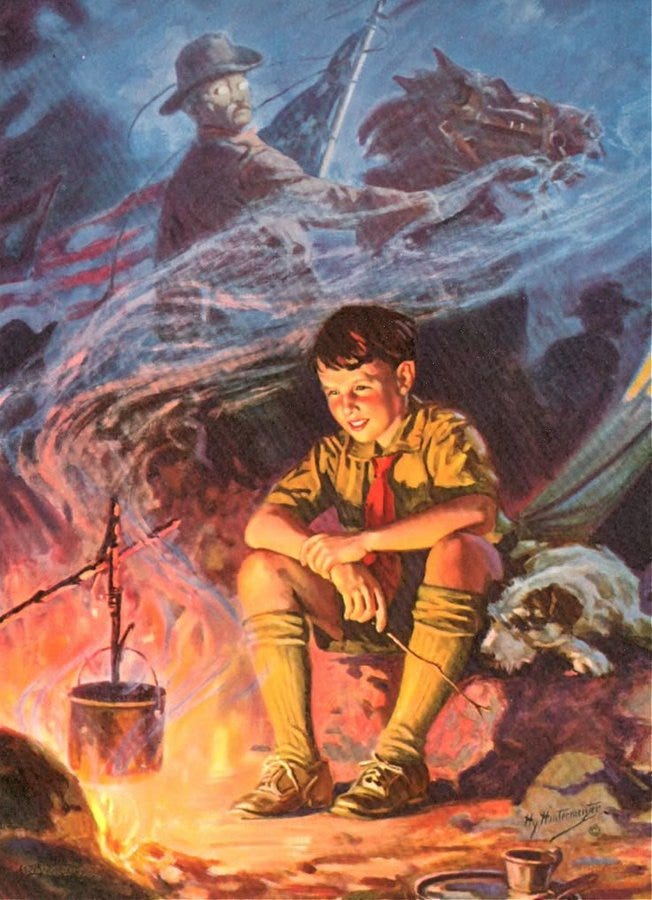
The difference between the "European" and the "American" became clear:
The Europeans "at home" continued their existence in "urbanized" conditions. The Americans, in contrast, thrust ourselves "back in time" to live purely in the wilds of nature. To strip oneself of European "heritage identity", two ritual rites of passage were required.
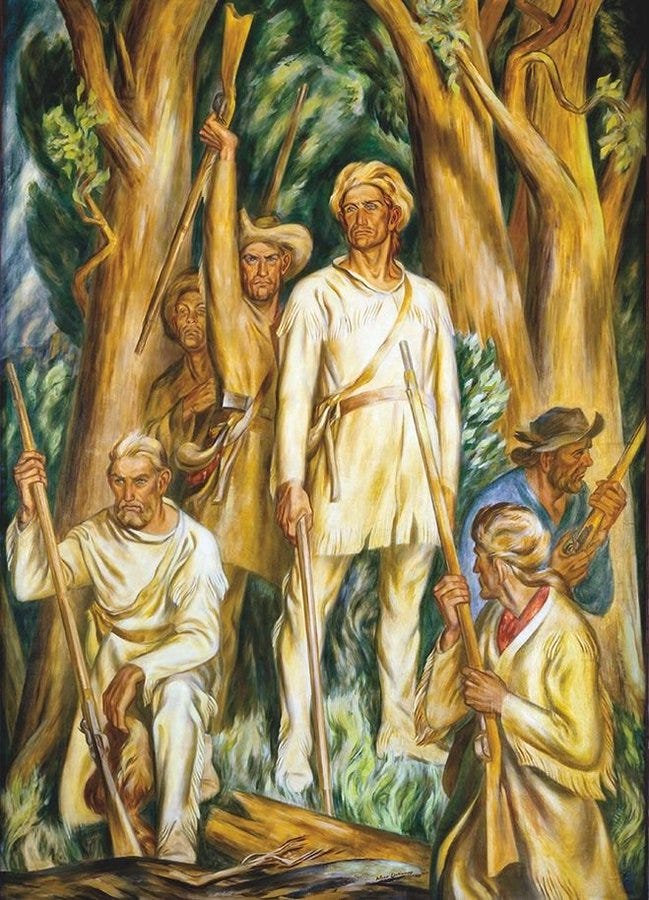
The Europeans "at home" continued their existence in "urbanized" conditions. The Americans, in contrast, thrust ourselves "back in time" to live purely in the wilds of nature. To strip oneself of European "heritage identity", two ritual rites of passage were required.
The European must first embark upon a trans-Atlantic sea voyage. Next, he must fully integrate with the wilderness across several generations.
One could not simply "show up" and call himself an American.
His lineage must be forged across several generations.
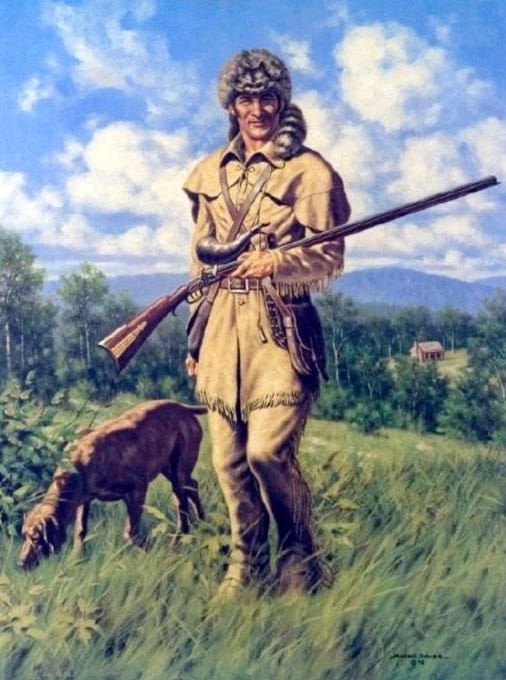
Turner believes that “the universal disposition of Americans to emigrate to the western wilderness ... is the actual result of an expansive power which is inherent in them".
This "power" lays dormant within Europeans and can only reawaken through a return to primitive conditions; it explains the motive of European global conquests.
We simply "cannot stop". Our "Faustian spirit" dares us to forever more reach beyond us. It is the American belief that, the depths of that power can only be unleashed through a devoutly acetic pathway.
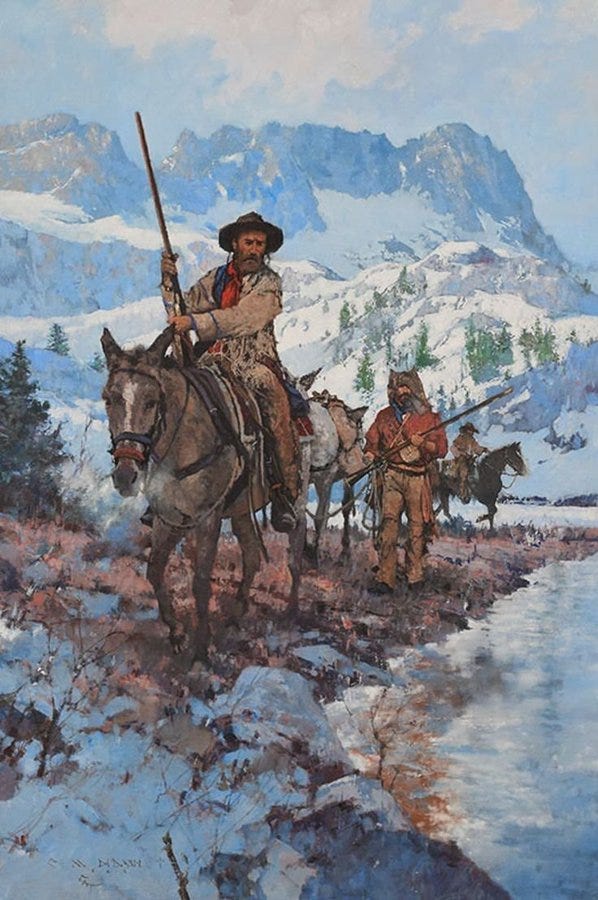
Turner continues:
“The wilderness masters the colonist. It finds him a European in dress, industries, tools, modes of travel, and thought. It takes him from the railroad car and puts him in the birch canoe."
"It strips off the garments of civilization and arrays him in the hunting shirt and the moccasin. It puts him in the log cabin of the Cherokee and Iroquois and runs an Indian palisade around him.”
An additional requirement to become "American" is the adoption of certain "Indigenous Indian" ways of life.
The Europeans were, of course, far too civilized to thrive in nature by themselves. They required, first, a knowledge of the land from the Indian inhabitants."
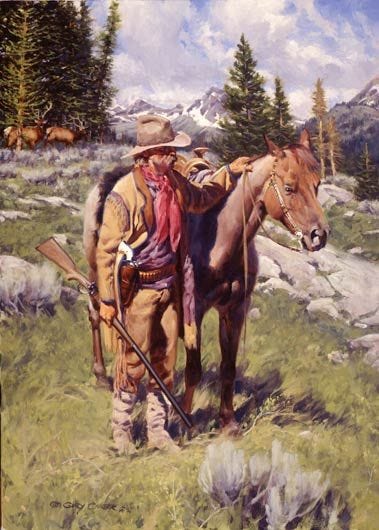
Turner identifies three "types" of Americans to conquest the West: pioneers, emigrants, and men of capital.
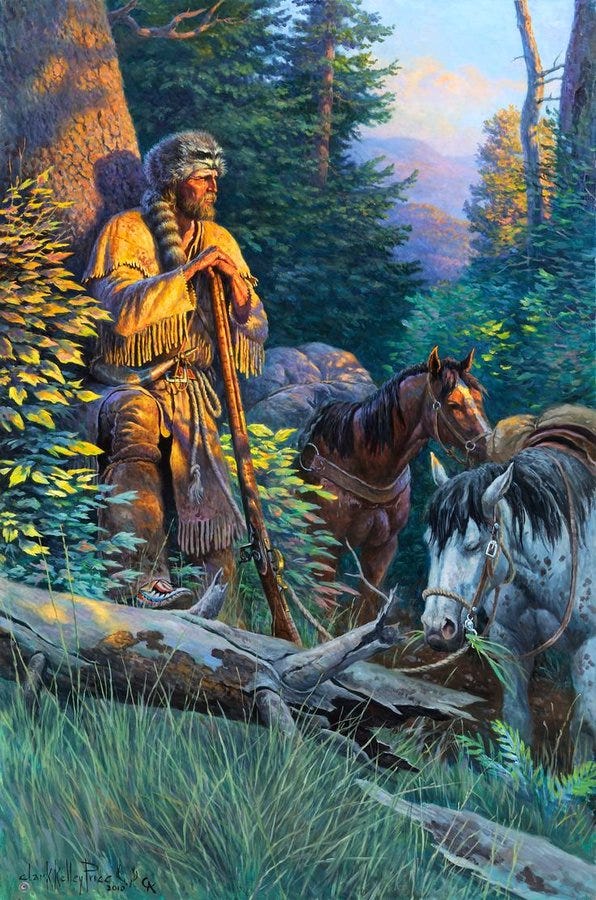
The best examples of "Indian adoption" come from our pioneers.
These exceptional men were able to fully master Indian trapping, hunting, and warfare techniques.
The pioneer provides for "his family chiefly upon the natural growth of vegetation, called the range, and the proceeds of hunting.
His implements of agriculture are rude, chiefly of his own make, and his efforts directed mainly to a crop of corn and a tuck patch."
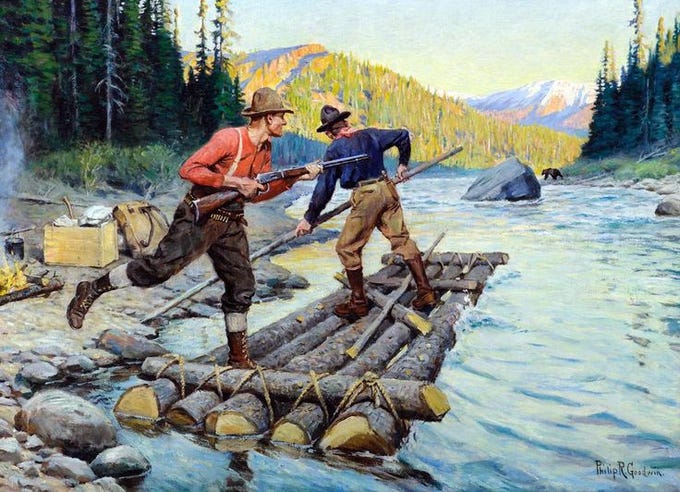
"With a horse, cow, and one or two breeders of swine, he strikes into the woods with his family, and becomes the founder of a new county, or perhaps state.
He builds his cabin, gathers around him a few other families of similar tastes and habits, and" orders the land to his will.
The "pioneer type" comprises the bulk of our "founding stock", who arrived prior to our nation's founding. Our "pioneer types" present the most authentic expressions of American identity and culture.
A "return to American tradition", means a return to American pioneer life.
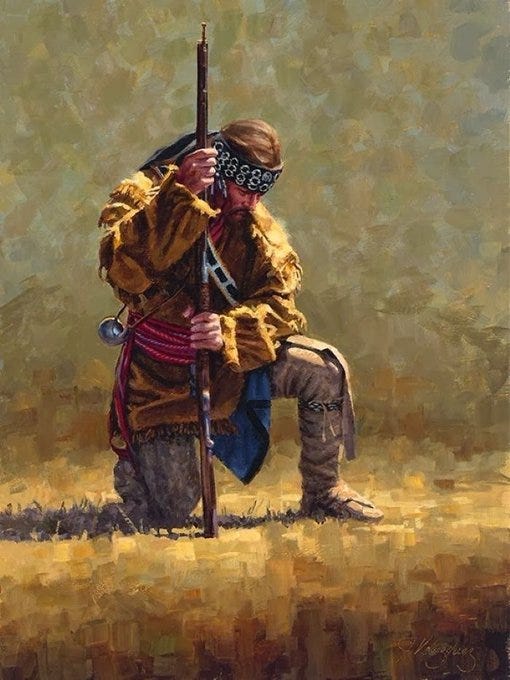
After the pioneer comes the emigrants who:
"purchase the land ... put up log houses with glass windows and brick or stone chimneys, occasionally plant orchards, build mills,
school-houses, court- houses, etc., and exhibit the picture and forms of plain, frugal, civilized life."
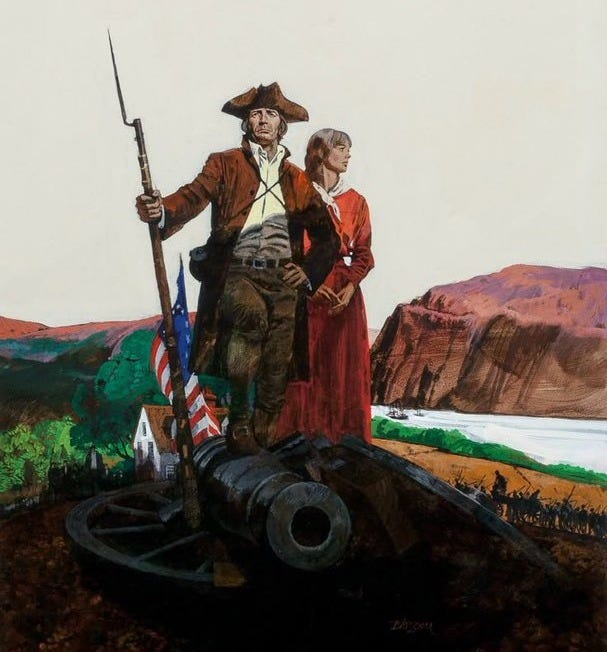
Finally, "the men of capital and enterprise come.
The settler is ready to sell out and take the advantage of the rise in property, push farther into the interior and become, himself, a man of capital and enterprise in turn."
The small village rises to a spacious town or city; substantial edifices of brick, extensive fields, orchards, gardens, colleges, and churches are seen.
... all the refinements, luxuries, elegancies, frivolities, and fashions are in vogue.
Thus wave after wave is rolling westward; the real Eldorado is still farther on.
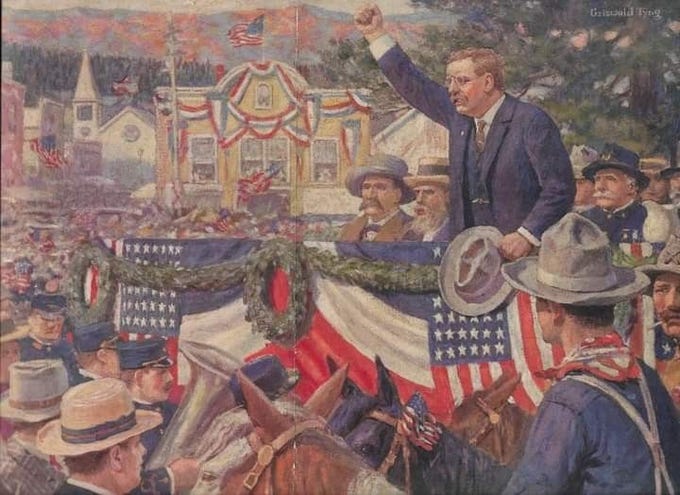
It is important to note that the pioneers continued onward, forever, and always onward.
Whenever civilization came to greet them, they may have accepted certain elements of capital, but he was continually pressed to move further than beyond, engaged in an eternal overcoming.
The American identity is based on the archetypes of the acetic, the warrior, and the adventurer. The American is not meant to be shackled to some sterilized suburbia, nor a dystopian cityscape.
He is a frontiersman, meant to be free to flourish in wild, unknown lands.
We must strive to destroy the division in our country through the development of an agrarian folk movement that unifies our people under our authentic folk traditions.
America belongs to the frontiersmen.
Our people must reawaken their dormant power within and Manifest Destiny.
What fortuitous timing of this article. On Tuesday I published my thesis that ethnic Americans embody what I call the “Pioneer-Priest” archetype:
https://newsletter.heritageamericans.us/p/priest-pioneer-the-heritage-american
This was quite good sir. I happen to be an advocate of the way of life you described as necessary to return to. I believe the best term for it is Yeomanry.